by Elly van Laar | Dec 5, 2013 | Compassionate Communication, Mindfulness, Personal Growth
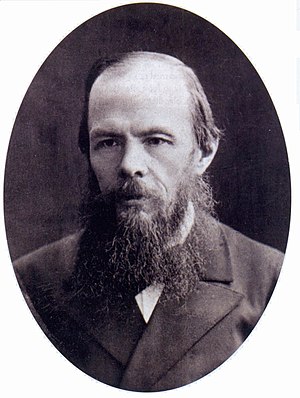
F. Dostoevsky Русский: Фёдор Михайлович Достоевский Suomi: Fjodor Mihailovitš Dostojevski (Photo credit: Wikipedia)
Saturday was my day off. It is the day of the week that I have designated for “me” time. It is the day without schedule, without ‘have to’, without commitments. It is the day that I only do what I want.
Usually I love these days. I have time to read books, call friends, hang out with my husband. I play “Jesu, joy of men’s desire” over and over again. I go for long walks in the woods. It is my weekly mini-retreat.
Last Saturday I hated it. It was horrible.
Dostoyevsky writes about the burden of freedom and choice in the Brothers Karamazov. One of the three brothers, Ivan, tells his younger brother Alyosha the tale of Jesus and the Great Inquisitor.
Jesus returns to Sevilla, during the time of the great Inquisition. He shares His compassion, He listens, talks, helps and heals. People all over follow Him.
At the peak of His ‘popularity’ He is put in prison. He is sentenced to death by burning. The Great Inquisitor visits Him the night before His execution. He offers Him life in return for His willingness to perform a miracle, forsake God, and accept power over the kingdoms of the world. Jesus refuses.
I have always loved this story. I feel compassion in how Dostoyevsky writes about both.
The Great Inquisitor cares deeply for ‘his’ people. He blames Jesus for offering freedom. In this freedom people have nothing to hold on to, nothing to hide behind, no excuses for their choices. They are the only ones responsible for their thoughts, speech and actions. And for the results they create. If they fail, that’s their responsibility. If they succeed, that’s their responsibility. Jesus takes away their scapegoat, and the people are left naked in their vulnerability of ambiguous conscience.
The Great Inquisitor claims that he offers the people a more compassionate alternative. He presents himself as the authority and judge of good and evil. He tells the people how to live. As a result people are free from the burden of choosing. They are free from second guessing, doubts, and regrets. Within his constraints, they can live happily ever after.
In return, the Great Inquisitor carries the burden of choosing, and accepting responsibility and accountability for his choices. He thinks that better than Jesus’s alternative of letting people make their own choices and suffer from regret, doubt, self-blame and insecurity.
As I sit on the couch, wondering if I should participate in the teleconference, or not, if I should go to the Hanukkah celebration, or not, as I end up just sitting, I am reminded of Dostoyevsky‘s parable. I feel consoled. Making choices is tough. Dostoyevsky says so.
by Elly van Laar | Dec 4, 2013 | Compassionate Communication, Mindfulness, Nonviolent Communication, Personal Growth

Smile!
Want to boost your business? Create a package. Something unique, something special. Offer it at 10x your normal price. Suggested by Patrick Schwerdtfeger. (More suggestions at Write Nonfiction Now!)
What? My heart starts racing. My armpits start sweating, I’m getting excited.
I imagine a retreat center. In the mountains, beautiful and serene. Eagles fly in the sky, trees stand tall. The theme is failure applause. To celebrate our efforts, and accept our failures. To free us of attachment to results, comparison with others and to life now. Building blocks: Individual coaching. Healing work. Group sessions. Silent meditation and creative arts.
And ask $2000 for it? Are you kidding? I don’t think I add enough value to ask that! I don’t think I am better than any of the other fantastic coaches out there! I don’t think I am worth that money!
And yet… Something tickles me. No one needs to sign up for my package. I can see it as play. To play being a successful, confident business woman.
I giggle. I think of a game my sister and I played at my grandma’s house, when we were young.
My grandma lived in a park, opposite a castle. There were trees around the house, a lake, rhododendrons. Visitors strolled on the premises, enjoying the beauty.
My sister and I would get dressed up in long, white dresses. Fancy shoes, lace gloves, brimmed hats. Then walk up and down the balcony, waving at people passing by. Graciously. Self-confident. Happy. We are princesses. We smile, and they smile back. What I never had the courage to do in normal life, I am perfectly happy to do in play.
Life is play. My business is play. I create a unique offer and ask 10x of what I feel comfortable with. Just for fun. I smile. I see people smile back.
by Elly van Laar | Dec 3, 2013 | Mindfulness, Personal Growth
Gatha’s
My teacher, brother Chan Huy, advises us to start the morning with this gatha:

Beauty in death
Waking up this morning I smile
24 brand new hours before me.
I vow to live fully in each moment,
and look at beings with eyes of compassion.
and to end our day with this gatha:
The day has now ended, our lives are shorter.
Now we look carefully, what have we done?
Noble Sangha, with all of our heart,
Let us be diligent, engaging in the practice.
Let us live deeply, free from our afflictions,
Aware of impermanence,
so that life does not drift away without meaning.
Are you kidding me?
He says you’re life will be transformed, if you do this for a couple of weeks.
Are you kidding me? Are you crazy? You think reminding me of my own approaching death is helping me? You seriously think that it’s gonna support a peaceful sleep?
Obedient as I am, I follow his advice. I recite the morning gatha, every morning, the gatha of impermanence every night.
No transformation!
It doesn’t transform me. It is a challenge. It triggers episodes of fear of death, of eternity, of life. I struggle with Thich Nhat Hanh‘s teachings on no-birth, no-death, the permanence of life, the impermanence of it’s different manifestations. I don’t like his insights so much, now that they become so close. How is it comforting to know that my death will bring birth to something else? That we are all interconnected? Who cares that I am part of the tree, the bird, the elephant? I want to live! And pretend I won’t die.
Or?
Something shifts in me. I see the hair on my husband’s head reclining. I look at his face, his hands. I know one day we will lose each other. One day we will die. No more touch, no more giggling, no more playing Bach together.
A sense of appreciation captures me. I realize that this is the only moment to celebrate him. This is the only moment to cherish myself. There is no other moment. Now is everything I have.
Surrender
I surrender to the morning gatha. I surrender to the impermanence gatha. And my life transforms.
by Elly van Laar | Dec 2, 2013 | Mindfulness, Personal Growth

Netherlands (Photo credit: didkovskaya)
Fatigue
I am tired. I am so tired, my eyes don’t focus. I see everything blurry and double. My body is losing control , I start bumping into things. When I am at home, I force myself to work. List my workshop, write a blog, do the dishes.
My husband comes home. Happy to see me. I slash out. Out of the blue. My words blurt out my mouth like a tsunami of anger, discontent, resentment, blame. He empathizes, he guesses my needs, he asks how he can support me. It is of no avail. Empathy doesn’t help when you need sleep.
Discipline
Why didn’t I go to bed as soon as I came home? Why didn’t I postpone my chores till the next day? Why didn’t I take care of myself? The question puzzles me.
I see this pattern of forcing myself to finish my plans, and train myself in endurance, perseverance, discipline. To be prepared for worst case scenarios. To survive war, hunger, torture.
Dying in the Netherlands
Last October I told my friend I was moving back to the Netherlands. She was surprised. Why? I told her I wanted to die among my family and friends, and be buried in Dutch soil. She laughed wholeheartedly. I was surprised. I didn’t get her. What was so funny about that? “Elly, you have at least 40 years between now and your death! And you’re giving up the life you love just in case? Why don’t you live first? And worry about death later?”
Go with the flow
Live first, worry later? Hum… That’s a radical reversal of my habitual thinking patterns. I like it. Hum. Yummy. Go with the flow. Enjoy my breath, the birds, my friends. Do what brings me joy and energy. Give life my all. Trust that that’s enough. That I am enough. That I do enough. That I have enough. Right here, right now.
by Elly van Laar | Nov 29, 2013 | Acceptance, Mindfulness, Personal Growth
She sits quietly, reverently. Almost solemnly. She picks up the mallet to invite the bell to ring. As she gently strikes the bell, I giggle. Out of the blue. I am tickled by the thought that we are playing mindfulness. Our playground is the Sangha, and sitting meditation is the game. We take our game seriously. When kids play hide and seek, they try to be super quiet, so that no one can find them. If they are discovered, they run as fast as they can back to base, before the seeker can tap them. And then they play again. And again. And again. There is no winning and losing, there is just playing.
We adults play mindfulness. We bow when we enter the room. We bow when we sit down, we bow when we get up. We bow when we serve tea. We bow when we drink tea. We bow to our teachers. We bow before we go home. We bow to our thoughts and label them “thinking”. We bow to our attention as we go back to our breath. We sit on a cushion and bow to everything that arises. To our entanglement in our thoughts, our presence, our breath. We bow in gratitude, and start over again when we’re lost. There is no winning and losing, there is just playing.
We once did a variation on this game. We were offered pen and paper and invited to write down our thoughts as they arose. I scribbled non-stop. “How much money do I have left?” “What is 38°F in Celsius?” “What should I write in my next blog?” Habitual thoughts, important thoughts, irrelevant thoughts.
My neighbor didn’t write down anything. I got anxious. Scribbling “I’m not mindful enough.” I got envious. Scribbling “My neighbor has a calm mind, and mine is stuffed with thoughts.” I got confused. Scribbling “Which game are we playing? Being mindful of whatever is present, or wining the competition of having the emptiest mind?” I giggle. There is something funny when games turn into competition. The fun is lost, there is just striving for winning. Scribbling “I rather have fun playing mindfulness, than be the best of my Sangha.”
by Elly van Laar | Nov 28, 2013 | Mindfulness, Personal Growth
Nine steps to deal unmindfully with your anger
- Start by being angry. Preferably with someone close, someone you deeply care about. Your partner, your best friend, your mom.
- Stimulate blame and thoughts of wrongness about the other person. “They don’t care about me.” “They don’t give a shit.” “They take me for granted.” Be creative!! There are so many choices! So pick any thought that ignites your anger even more.
- DON’T connect with the pain underneath your thoughts. DON’T feel your hurt, your shame, the old wound of thinking you’re not good enough, you’re not worthy, you don’t belong. For crying out loud, stay angry and work yourself up into more anger!
- DON’T talk to the person you’re struggling with. DON’T ask for help. Stop any impulse to practice going back to your breath. Forget Thich Nhat Hanh‘s suggestions to be gentle with your anger, to take good care of it, holding it like a crying baby. Run after the one you think put your house on fire, and DON’T try to quench the fire. You carry a slip of Thich-Nhat-Hanh’s-mindfulness-anger-steps? [1. I breathe in, I breathe out. Say “Darling, I suffer, I’m angry.”, 2. Breathe in, breathe out. Say “I’m trying, I’m really trying.” 3. Breathe in, breathe out. Say “I need your help and support.”??] This is THE time to tear it up and THROW it away! Remember you’re trying to do something unmindfully with your anger, not something beneficial.
- Disconnect from the person you blame. Make sure they know you’re angry, but DON’T engage with them.
- Pick up a big, sharp knife. Start cutting something hard and slippery. A butternut squash will do.
- Start cutting. Fast. Put all your anger in the cutting. Fire up thoughts about the wrongness of your loved one.
- DON’T pay attention to what you’re doing. Be absorbed by your angry thoughts. Drown in them. DON’T watch how the knife slips away and chops off your finger top.
- Watch the bleeding. Blame your husband. Blame yourself.
- Stop. Embrace yourself with compassion. See how strong and habitual your anger patterns are. You failed to hold your anger mindfully. You failed. You contributed to harm. Don’t make it worse by blaming and being angry. Use this experience as a wake-up call to interrupt these habitual, unconscious patterns. Glue the scraps of the slip of Thich-Nhat-Hanh’s-mindfulness-anger-steps together. Bring your attention to your breath. Apologize. Tell your husband you’re suffering. Tell him you’re trying, really trying. Tell him you need help and support. And if you’re lucky, REALLY lucky he will rush to your rescue and heal your bleeding finger.


